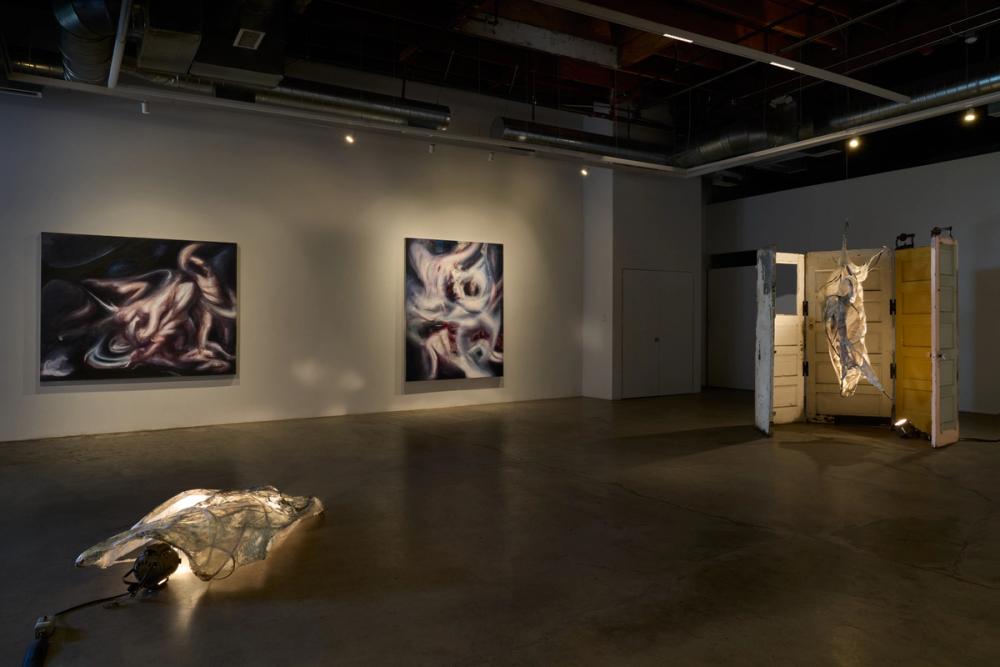
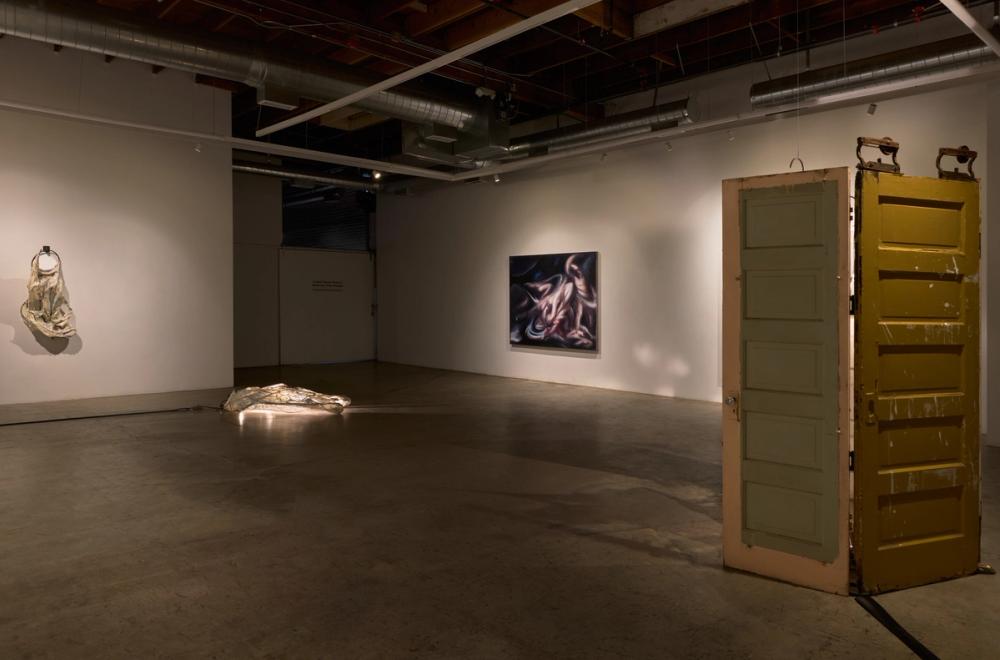
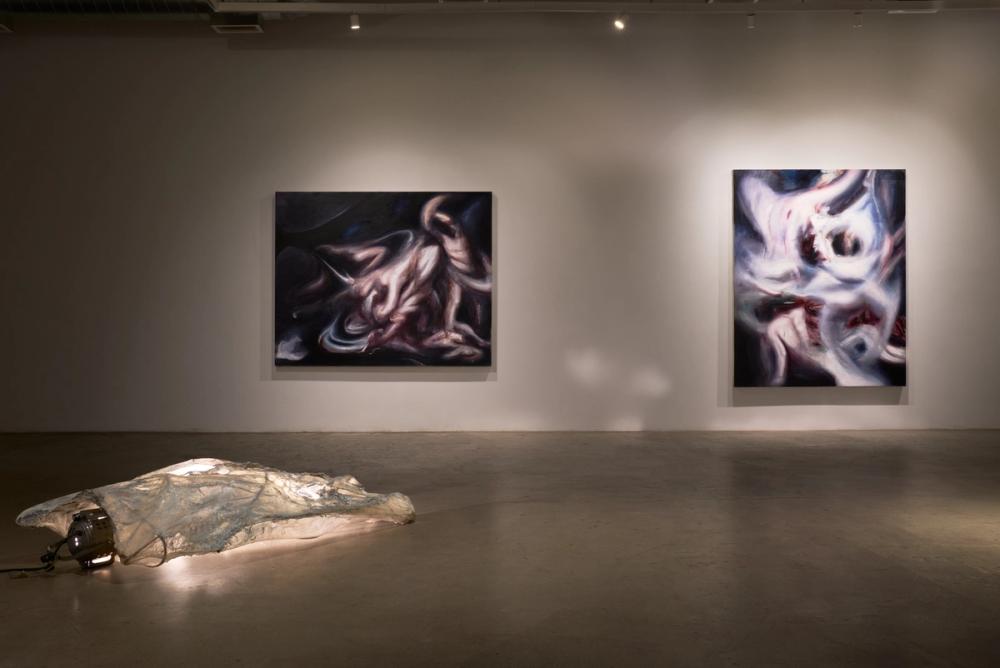
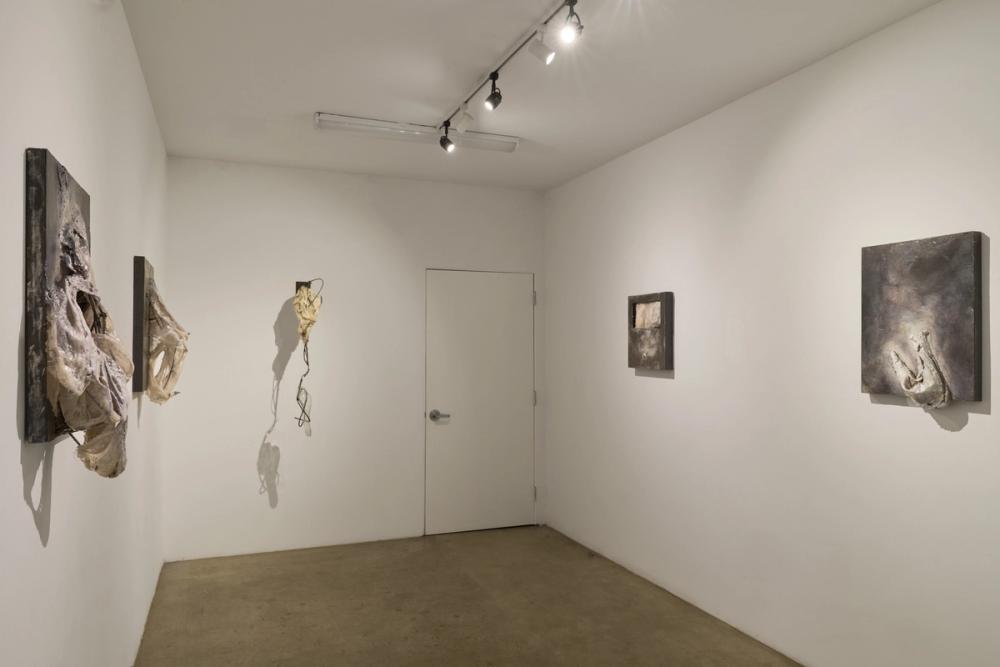
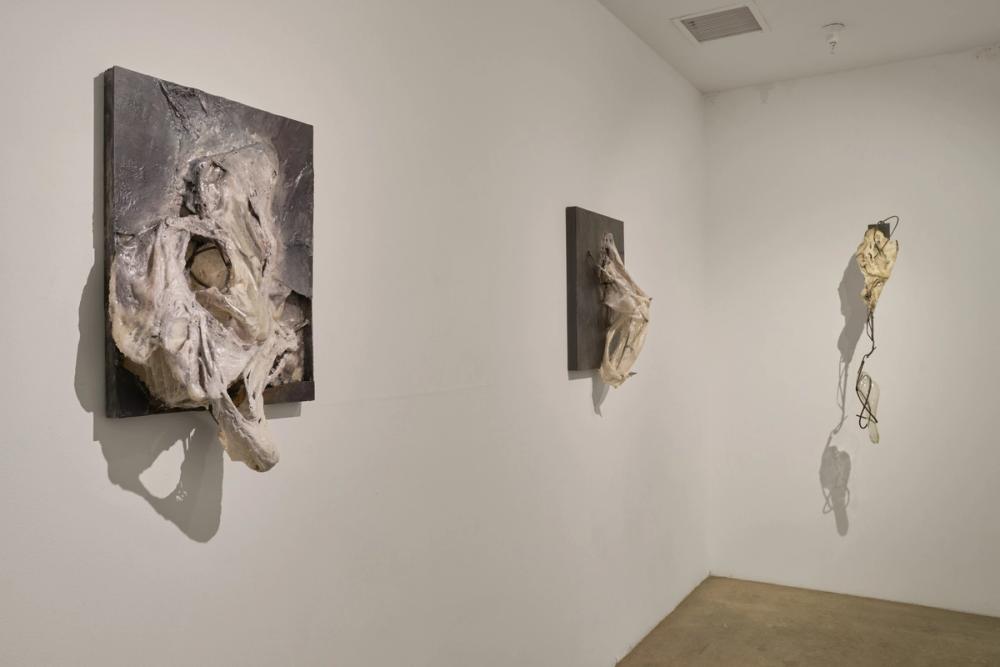

The exhibition Lonely Never Knows Jealousy, Only Despair by Mexican artist Rodrigo Ramírez Rodríguez grapples with a simultaneous attraction to and repulsion from darkness — a darkness conceived as a liminal space where painting and cinema converge, where images and surfaces recede, and where the boundaries between what is seen and unseen, felt and undergone, dissolve. In this new solo show — functioning as a shadow sequel to his previous exhibition in Mexico City, By Abrasion or Contagion, which dealt with the endless blending of images — Rodríguez continues to explore his abiding interest in the encounter between painting and sculpture as mediums, and expanded cinema and genre film as primary frames of reference, now through a violent dislocation of space, time, body, and self.
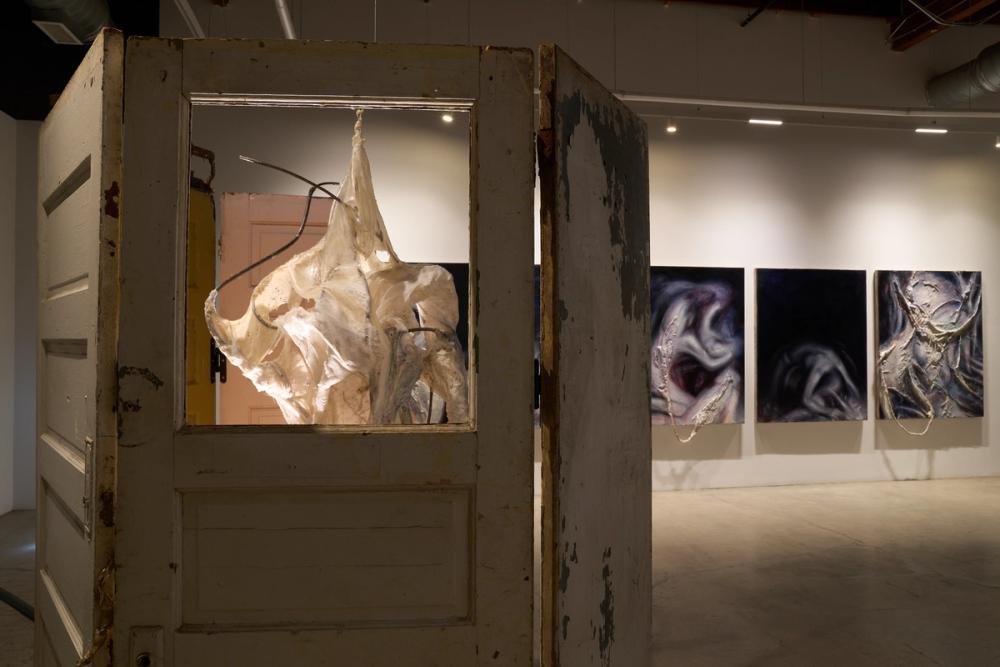
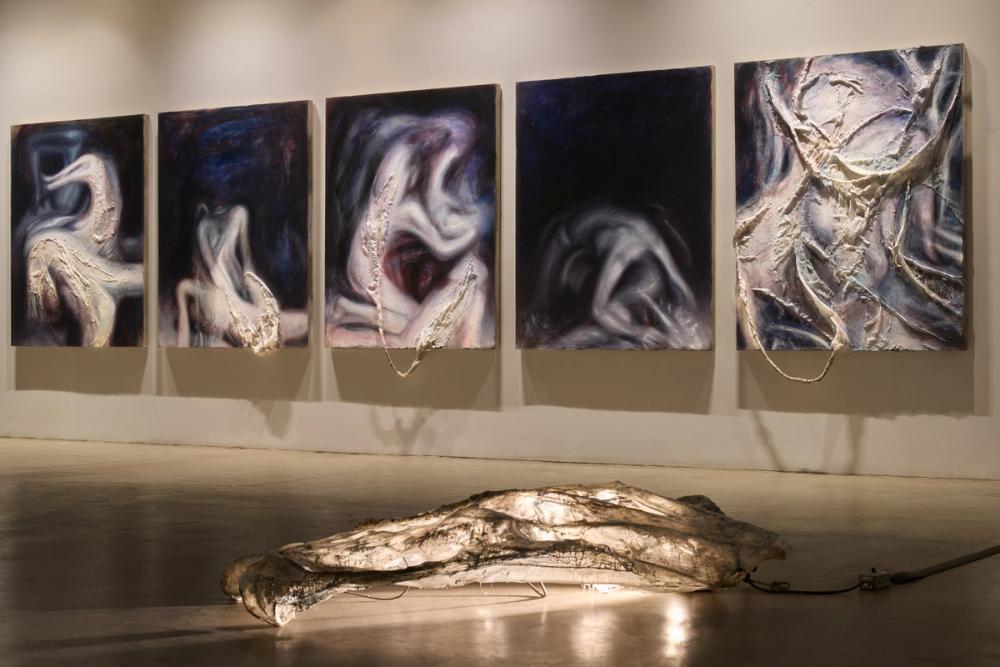
In a counterintuitive logic borrowed from cinematographic technique, light here becomes the generator of darkness. The ambition of this new body of work is to embody light as matter — to render palpable the materiality of the moving image. The exhibition space is darkened and deployed as a formal device. Space is constructed through the gradual layering of dark and light tones to establish volume, depth, and transparency across a sequence of five paintings that evoke film stills. Sculptures of skin-like membranes — coated in resin and encaustic wax, stretched over contorted steel — snare pockets of light, while paintings on distorted metal plates become gritty surfaces of diffraction. Within the darkness, these works form a fragmented sequence, annihilating any sense of chronology or rational space. They evoke the perilous visual dislocations of Peter Tscherkassky’s Outer Space, as well as the process of its making: manually cutting, merging, and adding fragments of disparate elements and materials; isolating certain parts; exposing some brutally to light and occluding others radically; accumulating and discarding in an endlessly chaotic process.
In the economy of this show, the matter of light possesses the same characteristics of viscosity described by Timothy Morton: the capacity to adhere, absorb, fill, and fully inhabit, always existing in relation to something or someone. Viscosity is an experience of sensory heightening and porosity in which visceral sensation takes precedence over perception. This primacy manifests most acutely in the translucent creatures and vestiges — unspoken protagonists dissolving into the shadows. The feeling of intrusion curdles into malaise as sculptures function like cocoons or frozen membranes, while ectoplasmic skins proliferate throughout the space. This indiscernible alien presence provokes an immediate sense of disgust and perhaps even abjection. Among the entangled bodies, the sensation of fusion becomes a longing — a movement of embrace, a constant exchange of affects and fluids in which desire operates as a dynamic process of dissolution and reformation of the self. There is almost a feeling of rest, a regressive relief, in surrendering to permeability.
Rodríguez conjures a mode of haunting reminiscent of genre film, where desire and dread coexist as structuring and essential polarities, and where proximity to the uncanny translates into distinct textures of darkness shaped by lighting design: the chiaroscuro of Expressionist and noir classics, the gritty palette of 1990s science fiction, the luminous excess of body horror. But here there is no narrative, no scene, no resolution — only unresolved tension. The liminality persists within the textures of darkness: a raw sensation and a lingering feeling that tap into an imaginary of both the beginning of time and the end of the world. On an affective and bodily level, terror — primordial terror of the dark — springs from two opposing forces: the confrontation with absolute solitude, and the dread of an all-consuming presence. The vertigo of being utterly alone, set against the menace of dissolution into another. In both cases, it is the fear of losing one’s own boundaries, whether into nothingness or into an other. Perhaps the same could be said of desire expanding in the shadows.
Words by Anaïs Lepage