
Beyond the house, across the United States, truckloads of cold bodies lined Central Park as the gray March air turned from late afternoon to night, while overhead, apartment-dwellers cheered from out their windows for the nurses and the doctors, the cashiers and the garbage men, and other normal people who were working with the dead and the infected. At least, that’s how the New York Times portrayed it. Or that’s what I imagined from the mattress on the floor of our apartment, swiping my thumb across photos of Manhattan and Shanghai, London and Italy – their hospitals and vacant city streets – while outside, here, the car horns blasted from the parking lot of Gelson’s on Franklin.
We came here when our toilet broke. It really was the stove that broke first, then the toilet. Our needs and the family’s fortuitously aligned: David’s grandmother was home alone in quarantine; we were without appliances in 600 square feet of space. And Newsom said the lockdown should be done at the end of May. In surgical masks, we entered the house through a side door that was carefully propped open. We dropped our bags on the washing machine; a month’s supply of Trader Joe’s snacks, charger cords and clothing. We’d be together in the house for the rest of that year.
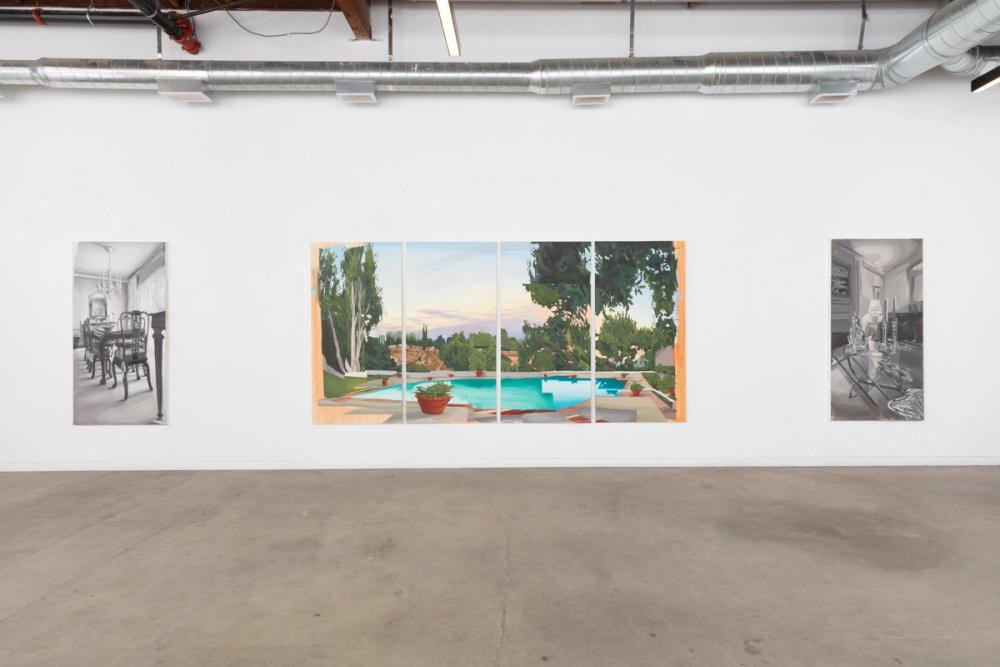
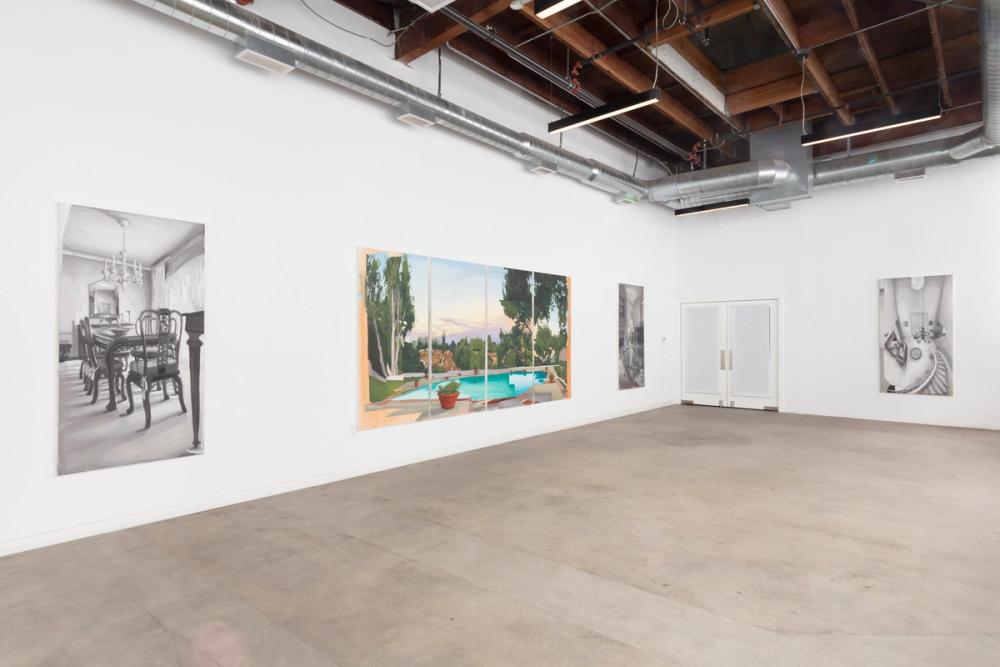
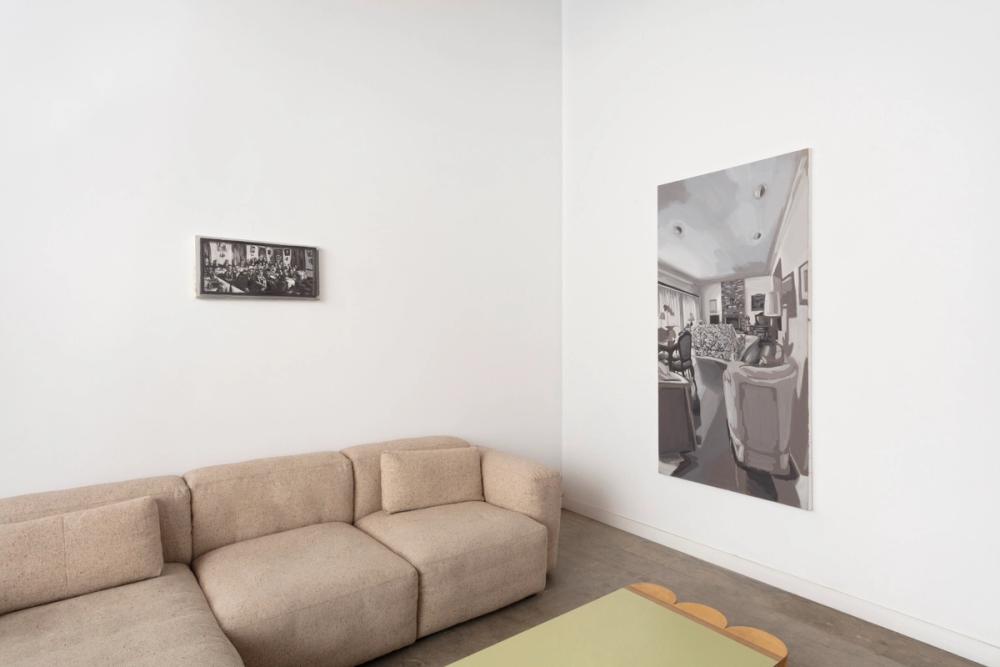
The first thing that I noticed was that everything inside the house was white. The tall foyer walls were papered with a white-on-cream damask; white carpets covered the floors, their blank tufts saturated with a threat of coffee not yet spilled upon them. A porcelain chandelier hung prominently in the dining room, whose walls and curtains also were white damask, and opened onto a living room furnished with ornate crystal objects – candlesticks, vases, statuettes of animals – and another porcelain plate on a low glass coffee table angled in the center of the room.
The home’s owner resembled its interior. Betty Jane – BJ – was 93, a matriarch to four whom she had raised there, and like the house, despite or perhaps because of apparent age, was strikingly elegant and severe: out of time with one world and still the clear arbiter of another one’s rules. Her hair was a sleek blown-out bob shaped like a gumdrop. It framed a bony face with a distinguished nose and heavy-lidded eyes with neatly penciled gray-black eyebrows. Her fingers were thin and tapered, their nails manicured a light shell pink; elongated ovals evoking the cursive in her grocery lists and date books. Though time had reduced her to 5 feet with a cane-assisted shuffle, her presence was commanding. She was regal yet discreet, and bitingly sarcastic, an archetypal hostess with the Greatest Generation’s mix of purpose and blunt practicality.
The longer we stayed there, the more the house’s antiquated contents seemed ensouled with something: the presences of BJ’s previous selves; the secrets shared by women, the 20th Century. A mahogany table, shipped from Hong Kong on a trip taken with Bernie and Sharlene. A pair of crystal bottles from a different trip to France. I imagined a train of elegant women, semi-transparent like ghosts, dusting light fixtures and vacuuming while wearing pumps and lipstick, a homemaking persona my own grandmothers had vocally rejected. They were 10 years younger, college-educated, with American parents and professional ambitions. BJ did not know her own parents, who brought her and her sister to a place they called “the Home” in the early 30s. The girls would ride out the Depression there, with other Jewish kids whose families died or couldn’t afford them; a Pittsburgh manor at once decorous and clouded with the subtext of its residents’ abandonment.
The months stretched through time like taffy in a pulling machine, at once stiff and elastic; the overton window of normalcy expanded and contracted with the seasons themselves. I’d go to work remotely, do something that described itself as a job; jump jacks and do crunches in front of my laptop. Across the hall, BJ sat at a desk doing parallel grandma tasks: writing birthday cards, playing solitaire, calling Sharlene and Harriet, her two living friends, before making her way slowly down the stairs. Throughout the house, an ambient stream of news played on cable tv. The anchors’ voices gently changed across the day like light; Anderson at sundown, Lawrence after dinner, Morning Joe before work and the others in the middle of the day. They told the time, the temperature, the polling stats, the death toll. Numbers passed like leaves on water, a stock ticker running at the bottom of a screen.
At night, I drove with David on Sepulveda through the city, West LA to the deep East Valley, listening to jazz along big streets both lit up and vacant. We had been tested by cohabitating, caretaking and isolation, yet also were newly strengthened by our challenges and routines. When Coltrane improvised, I felt peaceful hearing the notes through David’s musician ears: the band operated without structure, receptive to possibility, seizing it when noticed. Something was happening to me, to everyone. My spirit had been flayed, reduced to a sheath of expectations that now hung over a raw pink clove of remaning selfhood. Each minute was a threshold between an irrelevant past and a gaping future, and seatbelted into the moment, I was here. Sepulveda twinkled by as the car moved through it.
Two points within the house would become totems in my mind. The first was a wide-format photograph hung upstairs on a wall of family frames. It showed 35 people, somber-faced and dignified, half smiling with corsages at a table lined with water carafes and lillies. Beneath them is the caption: DAVID MOSCHKOWITZ BAR MITZVAH RECEPTION, LOS ANGELES OCTOBER 30 1938. The Bar Mitzvah boy pictured is BJ’s late husband, who got to America one year earlier, the day he turned twelve, and never spoke German again. The Jews in the photo were other immigrants, their stares proud with sacrifice, gathered in a rite of passage they’d given up all else they knew to continue. I saw the bar mitzvahs of my own youth in early 2000s LA private school – the glow-sticks, the DJs and airbrushed t-shirts – and grew dizzy with the vertigo of time. My life was not my life but just a pin within a process, the last stop of one century’s assimilation timeline and the first one for the people in the hundred years to come. Presidents and wars and personal losses and private moments filled an infinite container of seconds between myself and them, sand poured into a jar then shelved alongside other hand-me-downs and curios.
The other point of interest was a vista framed by the backyard, a panoramic view of rolling mountains in Mulholland Canyon. On clear days, Mt. Baldy appeared with its snow cap; at dinner times, the ocean mist would drown the empty chasms in fog. Against the manicured homes and jewel-green swimming pools dotting the landscape, its essence still was wild: trees grew thick past the reach of power tools and architects, mustard plants bloomed and exploded and died as birds and squirrels darted in and through them. The inside world – the lives lived behind doors, in rooms; the time held in closets and cabinets and boxes – seemed an infinite set of reflexive meanings, a tunnel of mirrors that faced one another and led to the core of the Earth. When I slid the glass pane open in the kitchen, pulling the old screen behind it and stepping in the air outside, I felt my feet on the sun-warmed concrete and the light against my face. The hummingbirds and squirrels didn’t know about our problems. The canyon’s trees would burn to ash, and then regrow in cycles of fire and rain. Mt. Baldy watched 10,000 feet above us from the east. The view appeared contained, but it continued.